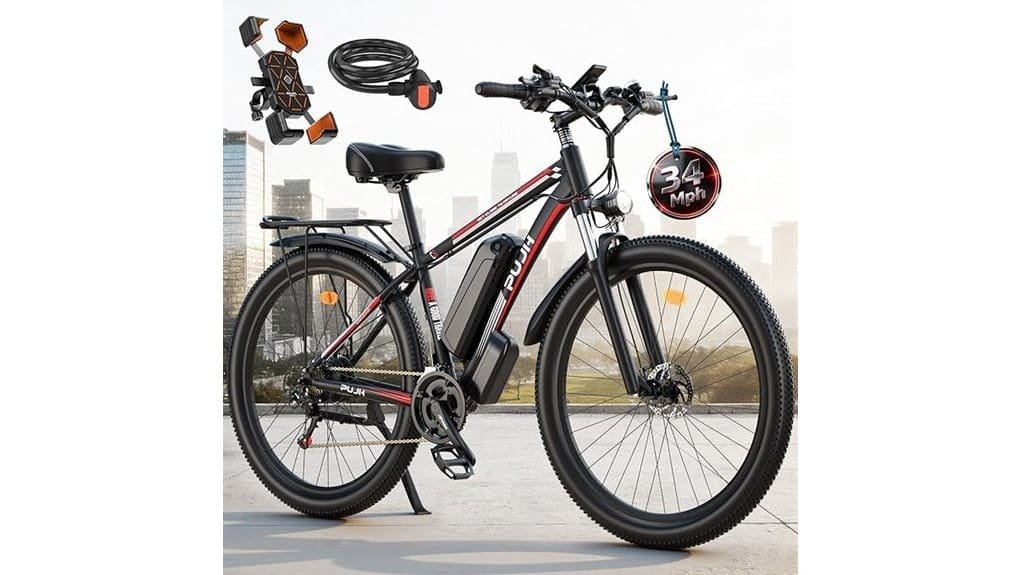
If you want a powerful commuter that climbs like a mini-motorbike, this 2000W-peak e‑bike gives brisk, immediate thrust, about 34 mph top speed, and usable 60 Nm torque for hill starts and rough singletrack. The removable 48V/840–912 Wh battery realistically yields 25–45 miles mixed riding and recharges slowly between long outings. It’s stable on 29‑inch wheels with light front suspension and solid brakes, but it’s heavy and not ideal for casual riders—keep going to see detailed trade‑offs and fit tips.
Some Key Takeaways
- 2000W peak motor delivers brisk acceleration and confident hill-climbing, but occasional throttle surge can unsettle traction.
- Class-3-ish top speed near 34 mph with 60 Nm torque suits commuters and light-trail riders needing strong low-end pull.
- 48V removable 840–912 Wh battery yields realistic mixed-route range of about 25–45 miles, reduced by weight, climbs, cold, and throttle use.
- 29-inch wheels and 6061 aluminum frame favor stability and durability, while modest front suspension limits aggressive off-road use.
- Solid safety and accessories included (disc brakes, lights, signals, rack, fenders), but test lighting/wiring and add a brighter rear light.
What the 2000W Peak Motor Actually Delivers on Hills and Trails
On steep climbs and rough singletrack, the PU1’s brushless 2000W peak motor puts out brisk, immediate thrust—you’ll feel strong acceleration up to its Class 3-ish top speed near 34 mph and reliable low-end torque for hill starts. You’ll notice consistent hill torque that keeps momentum without constant downshifting, and the 60 Nm figure translates to usable pull on steep pitches. Throttle-on-demand is responsive, though occasional throttle surge can unsettle traction if you’re abrupt. Pedal-assist smooths power delivery better than the twist throttle alone. Overall, power’s impressive for mixed terrain but needs measured inputs to avoid overcooking traction. The PU1 pairs well with high-performance ebike motors and components designed for off-road riding, making it a solid choice for enthusiasts seeking extra torque and speed on trails high-performance ebike motors.
Battery, Range, and Charging: Realistic 30–80 Mile Expectations
Although the PU1’s 48V pack is marketed as 840–912 Wh and rated for 30–80 miles, you should expect a much narrower real-world window once riding conditions, rider weight, assist level, and terrain are accounted for. In practice you’ll get 25–45 miles on mixed routes with regular assist and average load; heavier riders, steep climbs, or sustained throttle use push you toward the low end. Weather impact (cold, headwinds) further reduces range. The removable, lockable battery makes off-bike charging convenient, but plan for slower recharge between long rides. Check accessory compatibility to avoid unexpected power drains. For longer trips consider range extender options to maximize time on the trail.
Ride, Frame, and Comfort: 29 Wheels, Suspension, and Fit for Adults
With 29-inch wheels and a 6061 aluminum frame, the PU1 prioritizes stability and rollover capability for mixed terrain, but you’ll need to take into account fit and suspension travel to get the best ride. You’ll appreciate the large wheels’ momentum on gravel and trail, though wheel compatibility with replacement rims or tires matters for repairs and upgrades. Front suspension smooths chatter but travel seems modest for aggressive off-road use. Check rider ergonomics: saddle, handlebar reach, and the maximum 7-inch seatpost travel affect comfort and fit, especially if you’re near the minimum 5.4-foot recommendation. For trail-ready riders, don’t forget essential gear like a helmet and repair kit for mountain e-bike outings with essential gear.
Safety, Brakes, Lights, and Accessories You Get Out of the Box
After you’ve assessed wheel size, suspension, and fit, it’s worth checking how the PU1 protects you on the road. You get front and rear disc brakes that stop confidently but need proper bed-in; include brake check on your safety checklist before first rides. A large headlight, turn signals, and an LED display improve visibility; test brightness and wiring. Out-of-the-box accessories—rack, fenders, kickstand, horn, phone holder, lock, pump, spare tube and pads—are useful, though accessory compatibility is mixed if you want aftermarket upgrades. Assembly is 90% done; confirm torque settings and cable routing during final setup. Consider adding a bright rear light like those designed for ebikes for increased safety and visibility on trails and roads, especially during low-light conditions with bright rear lights.
Who Should Buy This Bike and When to Choose a Different Option
If you need a powerful, hill-climbing e-bike that can double as a commuter and light trail machine, the PU1 is a solid pick—its 2000W peak motor, 60 Nm torque, and removable 48V battery give you fast acceleration and long range for mixed-terrain riding. You should buy it if you value commuter suitability, need robust cargo capacity for groceries or gear, and already handle weighty, powerful bikes. Choose a different option if you’re a casual rider, are shopping for beginner riders, require ultra-light portability, or plan serious long distance touring where a lighter, more efficient e-bike with dedicated touring features would serve better. This model’s step-through design also makes it especially convenient for outdoor riders who frequently mount and dismount step-through ebikes.
Some Questions Answered
What Tools Are Needed for the Final Assembly at Home?
You’ll need basic hand tools and a few specific items: adjustable wrench and torque wrench, plus Allen key set (metric), Phillips and flat screwdrivers, 15mm wrench for axle nuts, pedal wrench, adjustable tire levers, pump, and cable cutters. You’ll also want grease, threadlocker, and a torque guide for recommended Nm. Follow the manual, tighten to spec with the torque wrench, and don’t skip safety checks before your first ride.
How Heavy Is the Bike for Lifting or Transporting?
The bike weighs about 70–90 lbs (weight range depends on battery and accessories), so it’s hefty for one person. When lifting, use lifting tips: bend your knees, keep the frame close to your body, and lift with your legs—not your back. If possible, get a helper, use a ramp or a wheeled carrier, and remove the battery to shave 10–12 lbs for easier carrying and safer transport.
Can I Install Child or Cargo Seats on the Rack?
Yes — you can mount a child carrier or cargo adapters on the rear rack, but you’ll need to choose sturdy, compatible attachments. The stock rack looks solid and the bike supports up to 120 kg, yet verify weight limits of specific child seats or cargo adapters and use proper mounting hardware. Always confirm clearances, secure fasteners, and follow manufacturer instructions; consider professional installation for safety and stability.
Is the Battery Airline or TSA Compliant for Travel?
No — the battery likely exceeds airline and TSA guidelines for travel. Federal TSA guidelines limit lithium-ion batteries in checked baggage to 100 Wh, with up to 160 Wh allowed with airline approval; this 48V 17.5Ah pack (≈840–912 Wh) far exceeds those battery restrictions. You’ll need to ship the battery via approved freight or use ground transport, and confirm carrier hazardous-material policies before attempting air travel.
Where Can I Get Replacement Parts and Upgrades?
You can get replacement parts and upgrades from the manufacturer, authorized replacement vendors, and reputable e-bike shops; check Shenzhen Ming Nuo’s parts portal and approved dealers. You’ll want to verify upgrade compatibility with your PU1’s 48V system, 29″ wheels, 6061 frame mounts, and 21-speed drivetrain before buying. Independent vendors, online marketplaces, and local mechanics can supply parts, but confirm warranty impact and technical fit first.