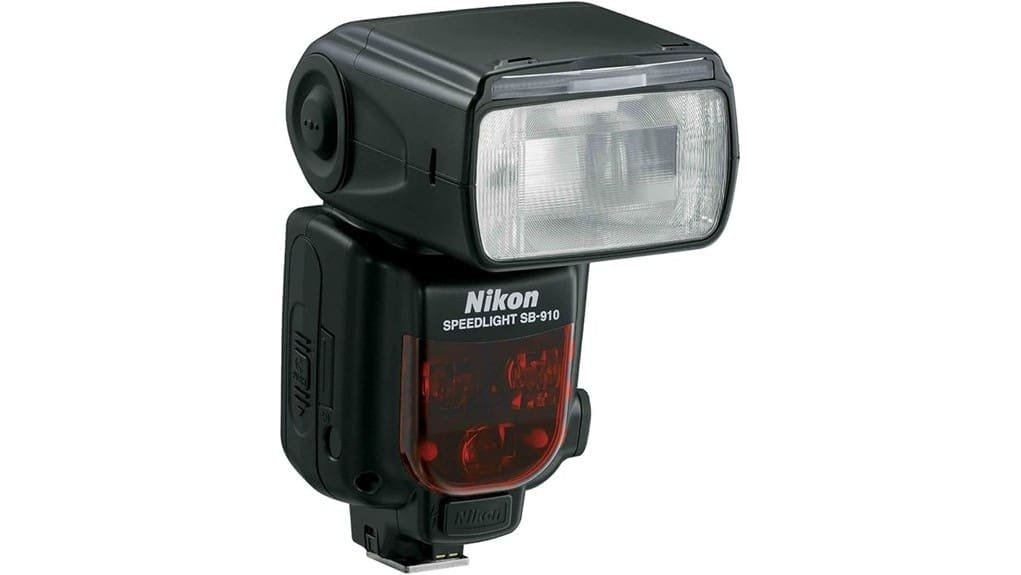
You’ll find the Nikon SB‑910 is a powerful, reliable on‑camera flash that gives you pro-level output, fast recycling, and clean i‑TTL metering for portraits and event work. It handles bounce well, offers full optical CLS control and manual fine-tuning in 1/3‑stop steps, and has solid build quality with thermal protection. Note the single proprietary battery, no weather sealing, and aging electronics—keep that in mind if you buy used, and keep going to see setup, wireless tips, and buying advice.
Some Key Takeaways
- Powerful guide number and zoom deliver strong, precise on‑camera flash suitable for portraits and event work.
- Reliable i‑TTL and fast recycling provide consistent exposures and support burst shooting.
- Full Nikon CLS optical wireless control enables dependable master/remote setups without radio triggers.
- Robust build and thermal protection give professional durability, though no weather sealing.
- Consider used‑unit checks (firmware, hot‑shoe contacts) and potential need for radio triggers or third‑party batteries.
Nikon SB-910 at a Glance: Who It’s For and What It Does
Though aimed at Nikon shooters who need versatile, high-powered flash, the SB-910 also suits advanced amateurs and pros who want reliable on-camera lighting plus full wireless control. You’ll find it excels for portrait lighting with strong guide numbers, adjustable zoom and compatible flash modifiers that shape output. The menu and improved thermal protection feel professional; firmware updates are occasional but meaningful, fixing quirks and adding stability. You’ll use it on location or in studio as a commander or slave. Consider its build and Nikon branding when judging resale value — it holds up better than entry-level flashes. It pairs well with sturdy light stands for reliable support on shoots.
Real-World Performance and Lighting Modes of the Nikon SB-910
When you start using the SB-910 in real shoots, its power, zoom range and reliable i‑TTL make it easy to get clean, consistent exposures across a variety of scenarios. You’ll notice fast flash recycling that keeps pace during bursts, and the guide number gives you headroom for group shots. Bounce patterns from ceilings and walls render natural skin tones when you tilt and swivel the head. Manual mode lets you shape light precisely; i‑TTL handles mixed ambient quickly. Optical wireless control performs reliably for off‑camera setups. Overall, the SB‑910 balances raw output with nuanced control for practical, professional use. This makes it a solid choice for photographers looking to master outdoor flash techniques with external camera flashes.
Setup, Controls, and Wireless Creative Lighting System Tips
After you’ve seen how the SB‑910 performs in real shoots, getting it set up and mastering the controls makes the difference between good and repeatable lighting. You’ll mount it, set camera flash mode, and use clear menu navigation on both camera and flash to assign groups and channels. Learn to lock settings, test exposure, and dial manual power in 1/3‑stop increments. For wireless Creative Lighting System use, position masters and remotes to avoid line‑of‑sight loss; label groups for speed. If you hit misfires, perform sync troubleshooting: check channel, optical pulse visibility, and shutter‑sync limits before blaming power. Also consider which softbox size and diffusion material best suit your subject to shape light effectively for consistent results with speedlights like the SB‑910 including when used with flash softboxes.
Power, Build, and Practical Pros and Cons for Field Use
Because the SB‑910 draws power from a single proprietary battery, you’ll notice its balance of stamina and weight: it runs about 12 hours on a charge while keeping the unit roughly a pound, which makes it comfortable for long handheld or on‑camera shoots but means you should carry a spare for intensive multi‑flash sessions. The build feels solid and professional; controls resist accidental shifts and the improved thermal cut‑out reduces overheating. Battery endurance is predictable but tied to recycle demands. Practical cons: no water resistance, so Weather limitations restrict use in rain or humid locations without protective gear. For photographers using multiple off‑camera units, consider investing in compatible flash sync cables to streamline power and triggering across setups.
Is the Nikon SB-910 Worth It Today? Buying and Compatibility Advice
If you need a robust, feature‑rich flash that still works seamlessly with Nikon DSLRs and Creative Lighting System setups, the SB‑910 remains a practical buy — provided you accept a few caveats. You’ll get strong output, reliable i‑TTL, and optical wireless control, but no weather sealing and aging electronics. Buy used only from reputable sellers, check firmware and hot‑shoe contacts, and factor in warranty or return terms. For future proofing tips, consider compatibility with newer Nikon bodies and whether you need radio triggers. Evaluate third party compatibility for remotes or batteries before committing; it can save headaches. Many photographers also pair flashes with RGB lighting to create more creative, color-rich scenes for portraits and product shots.
Some Questions Answered
Does the SB-910 Include Color Gels in the Box?
No, color gels are not included. You’ll need to buy color gels separately; the SB-910 ships with new hard type color filters noted but not a full gel kit, so plan an accessory_purchase for a gel holder and sheets. You’ll attach gels using a compatible gel holder or third-party mount, then secure them to the flash head. This gives you flexible color control but requires buying and fitting the right accessories yourself.
Can the Flash Be Used Underwater With a Housing?
No — you shouldn’t use the flash underwater even with aftermarket housings. The SB-910 lacks underwater durability and isn’t water resistant, so housing compatibility would be risky and voids warranties. Unless a tested, purpose-built underwater strobesystem is certified to accept the SB-910 and guarantees seal integrity, you’ll risk water damage. For reliable underwater performance, choose a dedicated underwater strobe designed for marine use and confirmed housing compatibility.
Is a Remote Trigger Included for Off-Camera Use?
No — a remote trigger isn’t included. You’ll get built-in remote capability via Nikon’s optical triggering (Creative Lighting System), so the SB-910 can act as commander or remote using optical pulses, but Nikon doesn’t ship an external radio trigger in the box. If you need radio control or a physical trigger, you’ll have to buy a compatible third-party radio trigger or Nikon SU-4/commander accessory separately for more reliable off-camera performance.
Does It Support Nikon’s Newer TTL Protocols on Z-Series Cameras?
No, it won’t natively support Nikon’s newer Z-series TTL protocols; you’ll need firmware compatibility or a camera-side legacy mode. The SB-910 was built for CLS/i-TTL on Nikon DSLRs, so flash metering and advanced TTL features on Z bodies can be limited or inconsistent without updates or using FTZ adapters and camera firmware that offer legacy support. Test metering thoroughly before critical shoots to confirm behavior.
What Specific Battery Model Is Required?
The SB-910 requires four AA batteries inserted into its battery tray; it doesn’t use a single proprietary pack. You’ll want high-quality NiMH AA cells for best recycle times and reliability, though alkaline AAs will work with slower performance. If you need faster flashes or longer shoots, get a dedicated external battery pack or high-capacity NiMH AAs. Always keep a charged spare battery tray ready for continuous shooting.