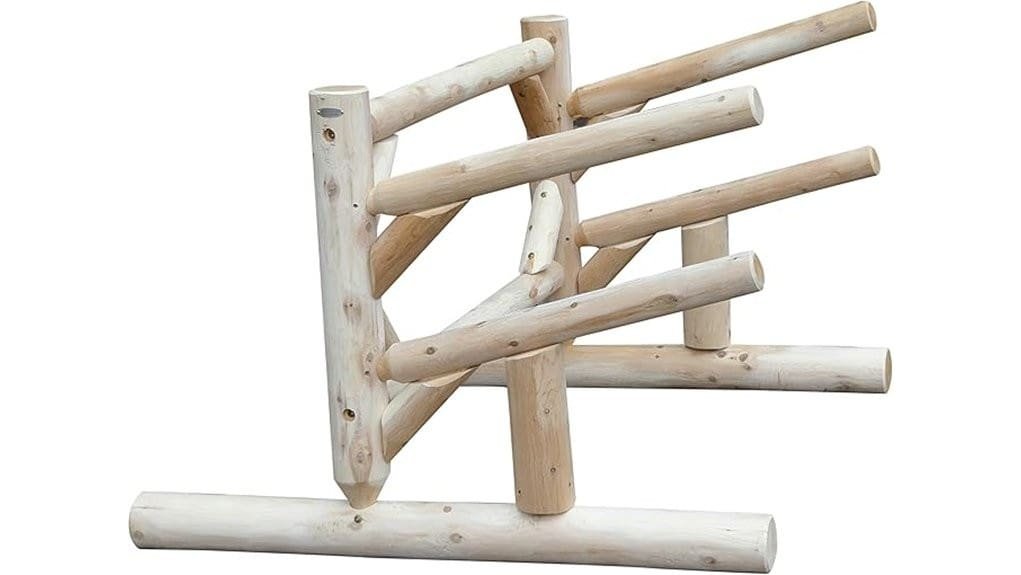
You’ll like the Log Kayak Rack 2-Place if you want a compact, hand-built cedar stand that holds a kayak plus a SUP (or two SUPs) with a 300 lb rating. It’s glued mortise-and-tenon for rigidity, uses stainless hardware, and assembles with basic hand tools and a socket wrench. Cedar resists rot but will weather if left unfinished, so plan sealing for low maintenance. Keep it anchored and level for best stability, and more details follow.
Some Key Takeaways
- Compact freestanding cedar rack holds one kayak plus one SUP, or two SUPs stacked, with a 300 lb total capacity.
- Handcrafted northern white cedar uses glued mortise-and-tenon joinery and stainless hardware for rigidity and durability.
- Unfinished cedar offers natural rot resistance outdoors but will silver and check without a finish.
- Requires basic assembly, two anchors, and tensioned galvanized cable for wind security; test lateral stability after installation.
- Best for homeowners wanting attractive, sturdy storage; consider sealed or low-maintenance alternatives if you dislike upkeep.
Quick Verdict: Is the Log Kayak Rack 2-Place Right for You?
Wondering if the Log Kayak Rack 2-Place fits your needs? You get a compact, freestanding rack that stores one SUP and one kayak (or two SUPs) while supporting up to 300 pounds. You’ll appreciate easy assembly and indoor/outdoor suitability for garage, patio, or yard. Expect simple maintenance tips: keep unfinished cedar sealed for outdoor exposure and check anchors and cable clamps seasonally. You can perform aesthetic customization during setup to match your space—stain or left natural to blend with surroundings. If you need sturdy, visible storage without complex installation, this rack likely suits you. This rack is part of the essential gear many freestanding rack buyers consider when setting up kayak storage.
What the Rack Is: Materials, Capacity, and Construction Details
If the quick verdict checked the practical boxes for you, here’s what the rack actually is: a handcrafted, freestanding cedar stand built to hold one kayak plus one SUP (or two SUPs, stacked) with a 300 lb total capacity. You’ll get northern white cedar with raw, unfinished cedar aesthetics that age naturally. Pieces fit via glued mortise joinery and tenons for rigidity; stainless hardware secures the base. It’s rated for indoor or outdoor use, and the freestanding footprint keeps boards accessible. Assembly’s straightforward: attach anchors and tension the galvanized cable; basic hand tools and a socket wrench are all you need. Consider pairing the rack with foam roof blocks for safe, cushioned transport and storage.
Real-World Performance: Outdoor Durability, Load Stability, and Storage Use Cases
When you set the cedar rack outside, it stands up well to sun and rain thanks to the wood’s natural rot resistance and the weather-focused joinery, though the unfinished surface will silver and check over time unless you apply a finish. You’ll find load stability strong: glued mortise-and-tenon joints and a 300 lb capacity keep a kayak plus SUP secure. For outdoor storage, place it on level ground and rotate boards occasionally to prevent uneven weather aging. Indoor use in a garage saves finish work. Plan simple seasonal maintenance—cleaning, inspecting joints, and applying finish as needed—to prolong life. Consider installing it as part of a smart kayak storage setup to optimize space and accessibility.
Assembly, Anchoring, and Wind-Security Steps You Should Know
Because proper anchoring and a few simple assembly steps make the difference between a secure rack and one that can tip in wind, you’ll want to follow a clear sequence: unpack and lay out parts, assemble the glued mortise-and-tenon frame, and tighten fasteners snugly with a small socket or wrench. Position anchors for solid anchor placement: two 15″ anchors in tight-packed earth or concrete anchors on hard surfaces. Thread the galvanized cable, set cable tension evenly, and clamp with supplied clamps. Do basic tool maintenance before storing. Finish with a wind testing routine—apply lateral force, recheck clamps and anchors, adjust as needed. Also consider storage-specific factors like rack placement to protect against sun and moisture.
Buying Checklist: Who It’s Best For, Trade-Offs, and Alternatives
You’ve finished anchoring and wind-testing, so now focus on whether this Log kayak rack actually fits your needs. You’re a beginner paddler or coastal homeowner if you want durable, weather-resistant cedar that holds a kayak plus SUP (300 lb). It’s great for garage, patio, or yard storage and is customizable during assembly. Trade-offs: unfinished wood needs sealing if you want low maintenance; assembly and anchoring require basic tools and two anchors; mixed-origin hardware may concern some buyers. Alternatives: metal tower racks for minimal upkeep, wall mounts for space-saving, or commercial plastic cradles for zero-maintenance storage. Consider also whether wall-mount racks would better suit your space and maintenance preferences.
Some Questions Answered
Does the Rack Come Pre-Treated Against Rot and Insects?
No — it doesn’t come pre-treated against rot and insects. You’ll want to add a rot resistant treatment rather than relying on pressure treated lumber or chemical preservatives already applied. Apply a waterproof sealant or exterior-grade preservative during or after assembly to protect the unfinished northern white cedar. That’ll improve outdoor longevity and insect resistance. Follow product-safe instructions and reapply sealant periodically for best results.
Can I Mount This Rack to a Concrete Floor or Pad?
Yes — you can mount it to a concrete floor or pad. Use appropriate concrete anchors through the rack’s base plates to secure it; choose wedge or sleeve anchors sized to the bolt holes. Drill to manufacturer-recommended depth, clean the holes, insert anchors, align base plates, then tighten bolts. For outdoor exposure, use stainless or hot-dip galvanized anchors and washers. Check torque and re-tighten after initial settling and seasonal changes.
Are Replacement Parts (Anchors/Cable Clamps) Available?
Yes — replacement hardware is available. You’ll contact the vendor for replacement parts and vendor contacts; they can ship USA-made anchor options or match galvanized cable and specify clamp sizes. Have your purchase info, desired anchor options (concrete vs earth), and exact clamp sizes ready. You’ll get guidance on compatible parts and may be directed to approved suppliers for cable and clamps if they don’t stock every item.
Will the Unfinished Wood Bleed Color Onto My Boards?
No, unfinished cedar rarely bleeds staining onto boards, but you should still take precautions. Cedar’s wood tannins are low and weather-resistant, so direct transfer is unlikely; however, moisture and prolonged contact can increase risk. Test a hidden area first and consider a barrier (cloth or foam) or applying a compatible finish. Check finish compatibility with your board’s materials to avoid solvents or adhesives that could harm finishes.
Can I Add Padding or Straps Without Voiding Warranty?
Yes — you can add padding and straps without voiding the warranty. You’ll want to choose padding compatibility with unfinished northern white cedar (non-staining, breathable foam or marine-grade fabric). For strap options, use soft, non-abrasive tie-downs or cam straps that won’t chafe the wood or boards. Install carefully so you don’t drill through structural joints; avoid permanent alterations to mortise-and-tenon areas to keep warranty intact.