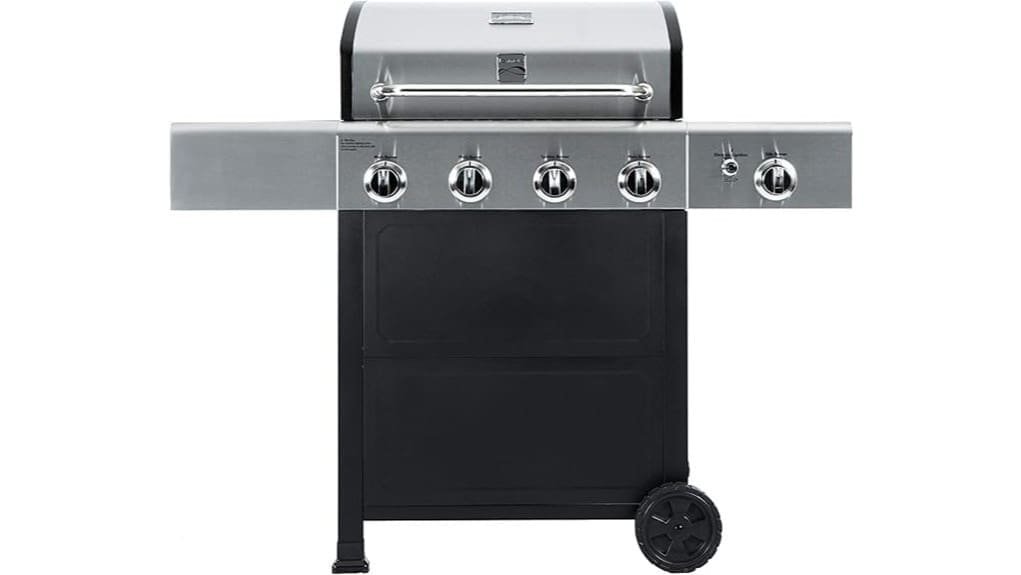
You’ll get roomy, reliable cooking power with the Kenmore 4-burner gas grill with side burner—53,000 total BTUs, cast‑iron grates for steady sears, and a 626 sq in cooking area including a warming rack, so you can handle burgers, whole chickens, and kebabs with ease. The side burner lets you finish sauces while the main grate works, and electronic ignition plus an open cart design balance convenience with routine care needs; keep going to see detailed pros, cons, and upkeep tips.
Some Key Takeaways
- Solid 53,000 BTU output across four main burners plus side burner delivers quick preheat and strong searing performance.
- Spacious 626 sq in cooking area (442 sq in primary + 180 sq in warming rack) fits about 20 burgers or two whole chickens.
- Cast-iron grates provide even heat retention and good sear marks but need regular cleaning, oiling, and occasional seasoning.
- Electronic ignition offers reliable starts and precise burner responsiveness, reducing failed ignitions.
- Open-cart stainless build is sturdy but requires weather protection and routine maintenance for long-term durability.
Quick Verdict: Is the Kenmore 4-Burner Gas Grill Worth Buying?
Bottom line: the Kenmore 4-Burner Gas Grill delivers solid performance and value if you need to feed a crowd without fuss. You’ll appreciate roomy cooking area and thoughtful features like a side burner and warming rack that keep service smooth. Check material durability—stainless components and cast-iron grates hold up with routine care, though open-cart elements need weather protection. Assembly time is reasonable for a four-burner unit; plan an hour with two people and follow the electronic ignition and parts layout closely. If you want straightforward capacity, sensible features, and predictable longevity, this grill’s worth considering. Many outdoor cooks also pair their grill with gas grill accessories to expand functionality and convenience.
How the Grill Performs: Heat, BTUs, and Temperature Control
You’ll notice the Kenmore 4-burner brings serious heat—53,000 BTUs across the primary burners and side burner translates into quick preheating and reliable high-heat searing when you need it. You’ll get fast ramp-up and controlled dialing for grillside techniques. Cast-iron grates aid even heat distribution and retention, so sear marks are consistent. Temperature consistency holds well during routine use; you’ll still manage flare-ups with spacing and lid work. Burner responsiveness feels precise when adjusting knobs, and electronic ignition reliability means fewer failed starts. Overall, the grill gives practical power and predictable control for everyday grilling. This model is a solid choice for fans of compact propane grills who want strong performance without taking up excessive patio space.
Cooking Space and Capacity: What Fits on 626 Sq In (Primary + Warming)
With 626 square inches of total cooking area—442 on the primary grate and 180 on the warming rack—you can comfortably cook for a crowd without crowding the food or compromising heat. You’ll fit roughly 20 burgers on the primary grate, or a mix of two whole chickens plus side pans. For family gatherings, reserve the warming rack for buns, rested steaks, or delicate fish fillets that need gentle heat. Bulk grilling works: align dozen kebab skewers across the main surface while indirect zones finish thicker cuts. The layout keeps items separated, lets you manage zones, and speeds service for larger groups. This setup is ideal for those who enjoy outdoor cooking with folding grills and need portable, efficient equipment.
Features That Matter: Side Burner, Cast‑Iron Grates, Ignition, and Build
After you’ve planned what goes where on the 626 sq in surface, it’s worth looking at the hardware that makes those zones work: the side burner adds a true secondary cooking station for sauces or sides while the cast‑iron grates hold and distribute heat for even searing, and the electronic ignition and solid build keep operation reliable. You’ll appreciate the side burner for simultaneous tasks without crowding the main grate. Cast‑iron grates retain heat and create sear marks, but require routine grate care: clean after use, oil lightly, and season periodically to prevent rust. The ignition is consistent; the open cart and finish are sturdy. Portable grill owners should also consider carrying essential gear to make outdoor cooking easier.
Who Should Buy This Grill and What to Compare Before You Buy
Because this Kenmore model balances high output and a roomy cooking surface, it’s a solid pick if you regularly grill for groups, like to sear and finish different foods at once, or want a built-in side burner for sauces and sides. You should buy it if you need 626 sq in total space, precise heat control, and cast‑iron grates for even searing. Compare durability, warranty, and materials with competitors, and weigh cart stability versus true portable options if you move it often. Budget buyers should check price-per-square-inch and available features elsewhere before committing. It’s a great choice for those outfitting an outdoor cooking area with a grill cart setup.
Some Questions Answered
Does This Grill Include a Propane Tank or Require Separate Purchase?
No, it doesn’t include a propane tank; you’ll need to purchase one separately. You’re covered on propane compatibility—the grill hooks to a standard 20 lb LP tank via regulator and hose. For fuel safety, you’ll want to inspect connections, use soapy water to check for leaks, store the tank upright outdoors, and turn off the valve when not in use. Keep a spare if you grill often to avoid interruptions.
How Much Assembly Time and Tools Are Required?
You’ll need about 60–90 minutes for assembly, depending on experience. Required tools include a Phillips screwdriver, adjustable wrench, and possibly pliers; some bolts may need a socket wrench (3/8″ or 7/16″). Work on a flat surface, follow the manual’s step order, and have two people for lifting heavier parts. Tighten fittings securely, check gas connections for leaks, and do a test ignition before first use to make certain everything’s safe and aligned.
Is There a Warranty and What Does It Cover?
Yes — you get a limited warranty that mainly provides parts coverage. You’ll be covered for manufacturer defects in materials and workmanship for a set period (check your model’s paperwork for exact months/years). It won’t cover normal wear, misuse, accidental damage, or corrosion from neglect. Keep your receipt and register the grill, and you’ll be able to request replacement parts or service under the terms specified in the warranty.
Can the Grill Be Easily Moved and Are the Wheels Lockable?
Yes — you can move the grill fairly easily; it’s designed with portable storage in mind and an open cart for access. You’ll roll it on caster wheels to reposition for grilling or storage, then engage the wheel locks to keep it steady while cooking. The cart balance plus cast iron grates make relocation manageable, but you’ll still want two people for stairs or rough terrain to avoid strain or damage.
How Difficult Is Cleaning Grease and Maintaining Cast‑Iron Grates?
Cleaning grease and maintaining cast-iron grates isn’t hard if you stay consistent. You’ll scrape and brush grates after each cook, then reapply cast iron seasoning occasionally to prevent rust and keep food from sticking. Empty the grease trap placement regularly so runoff doesn’t build up; check and reposition it if clogged. Deep-clean quarterly: remove grates, soak, scrub, and reseason. You’ll extend lifespan with simple routine maintenance.