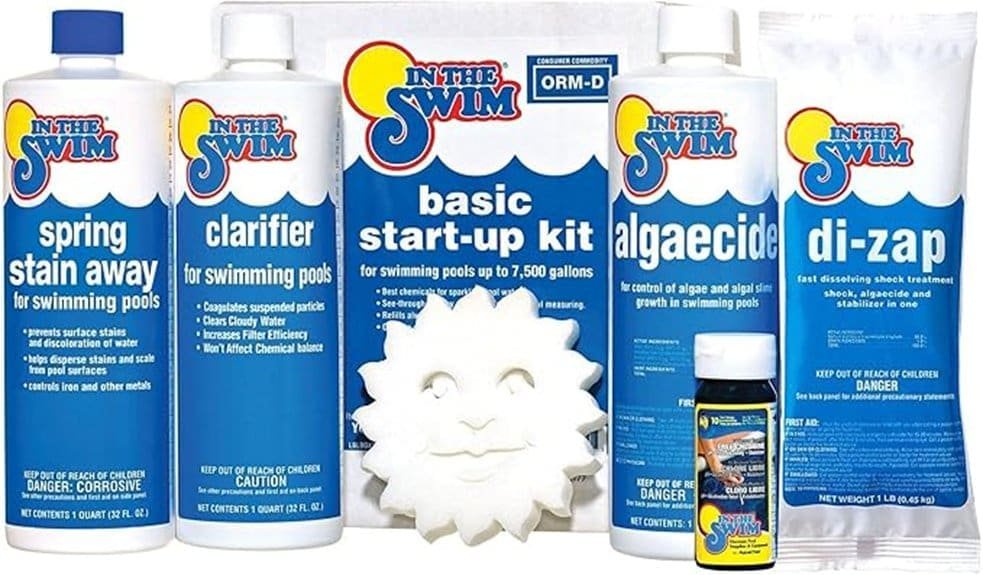
You’ll get a predictable, measured start-up for pools up to 7,500 gallons with the In the Swim Pool Basic Opening Kit. It supplies sodium dichlor sanitizer for controlled free chlorine, a clarifier to coagulate colloids, an algaecide for multi-class suppression, and a sun-sorb oil absorber to remove surface films and cut skimming. Follow the label for sequential dosing and 24-hour filtration cycles for best results, and continue below for detailed steps, metrics, and buying guidance.
Some Key Takeaways
- Kit includes sodium dichlor sanitizer, clarifier, sun-sorb oil absorber, and algaecide for predictable startup dosing and maintenance.
- Designed for pools up to 7,500 gallons, suitable for small-to-medium above-ground and in-ground pools.
- Follow label: add dichlor, run filtration 24 hours, then add clarifier, sun-sorb, and algaecide; retest after 24 hours.
- Performance: maintains target free chlorine decay profile, reduces turbidity via coagulation, removes oil film, and suppresses algae.
- Good value as a bundled startup kit for initial shock and several weeks’ maintenance; choose alternatives for larger pools or heavy bather loads.
What’s in the In the Swim Pool Basic Opening Kit (And Why Each Item Matters)
When you open the In the Swim Pool Basic Opening Kit, you get a compact set of purpose-built chemicals designed to take your pool from stagnant to swim-ready and keep it balanced for ongoing maintenance. You’ll find sodium dichlor sanitizer for consistent free available chlorine, clarifier to coagulate fine particulates and improve filter capture, sun sorb oil & scum absorber to remove oils and reduce filter load, and algaecide to inhibit multiple algae classes and support shock. Each component’s role aligns with basic water chemistry principles, and clear ingredient sourcing guarantees predictable performance and dosing control. The kit provides essential pool-opening chemicals for homeowners who enjoy their outdoor spaces and prefer convenient, reliable solutions like pool opening chemicals for a sparkling start.
How to Use the Kit for a First-Time Pool Opening (Step-by-Step for Up to 7,500 Gal)
Although you’ve read the product overview, start by confirming your pool is drained of debris and the filtration system is operational; this guarantees the chemicals perform predictably. Perform a systematic pool inspection: check liners, skimmers, pumps, and valves for damage or leaks. Complete equipment setup: reconnect pump, install filter media, and set return jets. Measure water volume (≤7,500 gal) and test baseline pH, alkalinity, and chlorine. Add sodium dichlor per label dosing, run filtration 24 hours. Introduce clarifier and sun-sorb per instructions, then dose algaecide. Re-test after 24 hours; adjust as required for safe swim-ready water. Regular shock treatments help keep your pool sparkling and prevent algae buildup when used as part of routine maintenance.
Performance Breakdown: Sanitizer, Clarifier, Algaecide, and Oil Remover Results
With the pool open, inspected, and initial treatments applied, we’ll evaluate how each component of the starter kit performed under controlled conditions for pools up to 7,500 gallons. You measured free chlorine decay over 72 hours to assess chlorine longevity; sodium dichlor maintained target ppm with predictable drop-off, enabling scheduled top-ups. Clarifier reduced turbidity by coagulating fine particulates; testing identified cloudiness causes primarily as colloidal organics, not filter failure. Algaecide showed immediate suppression and improved algae resistance when combined with shock. Sun sorb oil remover eliminated visible oil film and reduced skimming frequency, easing filter load and improving clarity. This kit complements seasonal maintenance routines homeowners use to keep pools sparkling throughout summer.
Who This Kit Is Best For : Pool Types, Sizes, and Common Problems It Solves
Because it’s formulated for pools up to 7,500 gallons and combines start-up and maintenance chemicals, this kit fits owners of small to medium above-ground and in-ground pools who need a straightforward, measurable treatment regimen. You’ll find it ideal for family pools where predictable sanitizer levels and rapid clarification matter. It addresses common issues: initial shock and chlorine establishment, particulate cloudiness, oil/scum accumulation, and early-stage algae. Use the included Maintenance guidance to implement weekly dose checks aligned to Seasonal schedules. Technical users will appreciate clear dosing for Di-Zap sanitizer, clarifier cycles, algaecide prevention, and oil-absorber maintenance. Many homeowners looking to improve their outdoor living spaces find these kits useful for creating a consistent backyard oasis with family-size swimming pools.
Value Check: Cost, Alternatives, and When to Buy a Different Kit
When you compare the kit’s contents and capacity against typical seasonal needs for pools up to 7,500 gallons, the bundled approach usually delivers better per-dose value than buying each chemical separately; you get a measured supply of 99% sodium dichlor sanitizer, clarifier, algaecide, sun-sorb oil absorber, and supporting products sized for initial start-up plus several weeks of maintenance. You’ll assess cost-effectiveness by calculating doses per gallon and expected consumption over peak seasonal timing. For larger pools, heavy bather load, or specific water chemistry targets, a different kit or individual concentrates may be cheaper. Perform a brand comparison and buy alternatives when capacity or formulation mismatches occur. For homeowners focused on preventing algae and maintaining clean water, choosing the right kit should include checking product types like algaecide options to match your pool’s needs.
Some Questions Answered
Is This Kit Safe for Vinyl, Fiberglass, and Gunite Pool Surfaces?
Yes — you can use this kit on vinyl, fiberglass, and gunite surfaces when dosed and applied per instructions. You’ll maintain surface compatibility by testing and adjusting water chemistry (pH, alkalinity, sanitizer) before full dosing. Use clarifier and oil absorber as directed to aid finish preservation and avoid overuse of concentrated shock or algaecide on delicate finishes. Follow label dilution and wait times to prevent staining or etching.
Can These Chemicals Be Used With Salt Systems or SWG Pools?
Yes — you can use these chemicals with salt systems, but you’ll follow precautions. The sodium dichlor and algaecide are salt compatible treatment when dosed correctly; clarifier and oil absorbers don’t interfere with SWG function. You should avoid introducing incompatible liquid chlorine products. Monitor sanitizer and stabilize chlorine levels to prevent electrode corrosion, maintain proper pH, and follow manufacturer guidelines for both the SWG and the chemical kit to protect equipment.
How Long After Application Is the Pool Safe for Swimming?
You should wait until chlorine levels return to a safe range before swimming—typically 1–4 hours after adding dichlor, depending on dose and pool circulation. Measure free chlorine; it must be within recommended pool guidelines (usually 1–3 ppm for residential pools). If you shocked the pool or added high doses, wait longer and re-test until chlorine levels drop to safe limits. Confirm proper filtration and retest before entry.
Are Any Items in the Kit Hazardous for Pets or Landscaping?
Yes — some items can be hazardous to pets and landscaping. You’ll handle sodium dichlor, algaecide, clarifier, and oil/scum absorber as toxic to animals if ingested or contacted; they can burn plant foliage or alter soil chemistry if spilled. You’ll store chemicals securely, follow dilution and application rates, avoid runoff into gardens, rinse treated surfaces, and keep pets away until residues dissipate per label instructions to minimize pets safety and landscaping impact.
Do These Chemicals Have an Expiration Date or Shelf-Life?
Yes — most pool chemicals have limited shelf stability. You’ll find sodium dichlor, algaecide, clarifier and oil absorbers remain effective for 1–3 years if sealed. You should store them dry, cool, and away from direct sunlight; maintain original containers and avoid moisture, heat, or cross-contamination. Degraded or caked products may lose strength; always inspect, test, and follow label storage conditions to guarantee safe, predictable performance.