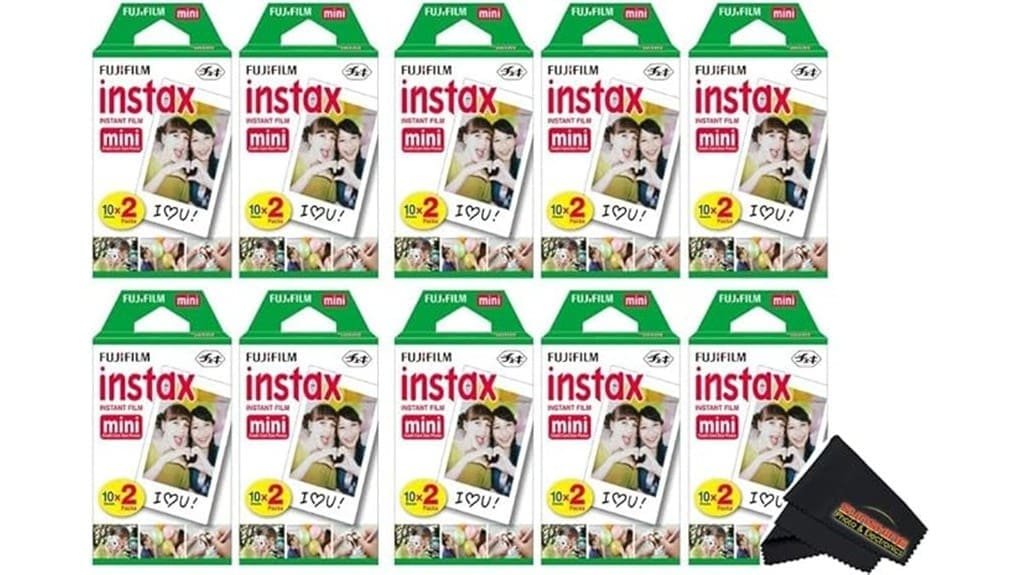
You’ll get ten twin packs (200 Instax Mini sheets) that deliver punchy, wallet‑sized color prints with a classic white border and ISO 800 sensitivity. Colors, especially skin tones and saturated scenes, pop, but expect noticeable grain and softened fine detail; low light increases warmth and grain. Compatibility is best with Fujifilm Mini cameras and Mini Link printers; older models can misexpose. Bulk packs cut per‑shot cost but need proper storage. Keep going to see tips and model‑specific behavior.
Some Key Takeaways
- Produces punchy, natural colors with strong skin-tone and saturated scene rendition, ideal for fun, candid shots.
- Noticeable grain and softened detail create a vintage, textured look rather than archival sharpness.
- Works reliably in Fujifilm Instax Mini cameras and Mini Link/SP printers; older or third‑party models may misexpose.
- ISO 800 daylight‑balanced film needs good light or flash; low light increases grain and warms tones.
- Bulk 200‑sheet packs lower per‑shot cost but require proper storage and timely use to avoid degradation.
What You Get in the Box and Key Specs for Instax Mini (10-Pack, 200 Sheets)
Open the box and you’ll find ten Twin Packs totaling 200 Instax Mini sheets (10 exposures per pack), each sheet sized 5.4 x 8.6 cm with a 2.4 x 1.8 in image area and classic white border. You get the box contents clearly: ten sealed film packs, instruction leaflet, and protective sleeves absent. Key specs matter: ISO 800, colored film, wallet-sized prints, non-waterproof, daylight‑balanced. Compatibility lists Instax Mini cameras and Mini Link printers. You’ll appreciate the straightforward supply for frequent shooting, though lack of warranty detail and water resistance limits professional or outdoor reliability. For photographers who shoot a lot, consider large capacity storage solutions to keep your workflow efficient.
How Image Quality, Color, and Grain Perform in Real Shooting Conditions
When you shoot with Fujifilm Instax Mini film in normal daylight, you’ll get punchy, natural colors and noticeable grain that give prints a vintage, textured look rather than clinical sharpness. You’ll notice strong color rendition for skin tones and saturated scenes, though subtle gradients and deep shadows lose detail. Grain texture is prominent—it’s part of the appeal—but it softens fine detail and reduces perceived resolution. In low light the film biases warm tones and increases grain, so exposure control and flash matter. Overall the film rewards bold compositions and candid moments; don’t expect tack-sharp, archival fidelity. Rediscover Analog sells a curated selection of film camera gear for enthusiasts and beginners alike, perfect for exploring film photography.
Compatibility and Automatic Exposure: Which Instax Mini Devices Work Best?
Although many Instax Mini films will physically fit a wide range of devices, compatibility and automatic exposure vary across models, so you should match film to camera or printer for best results. You get true camera compatibility with Fujifilm Instax Mini cameras and dedicated Mini Link/SP printers; third‑party devices may work but can misreport frame counts or fail to trigger flash properly. Automatic exposure works reliably on Mini 11/12 and higher‑end Mini 90, producing consistent ISO‑800 results and balanced colors. Lower or older models sometimes underexpose in low light or overexpose bright scenes, so test before important shoots. For enthusiasts using mirrorless systems, pairing your printer or camera with the right instant film enhances workflow with essential gear.
Cost, Value, and When to Buy Bulk Film Versus Single Packs
Buying Instax Mini film in bulk usually lowers the per‑shot cost enough to justify the upfront spend if you shoot frequently or plan events. You’ll pay more initially for a 200‑sheet bundle but save per exposure versus singles. Consider storage, shelf life, and whether you’ll use all sheets before quality declines. Singles suit casual users, testers, or occasional gifts. Factor in resale potential only if you buy limited editions or unopened packs; general Twin packs don’t fetch premium resale. Run the math: divide total price by sheets, compare to single‑pack unit cost, and choose based on expected shoot volume. Also consider using protective photo sleeves to preserve prints and maintain resale value.
Practical Tips for Getting Better Instant Prints and Common Troubleshooting
To get consistently better Instax prints, start by controlling light and handling—keep shots well‑lit (daylight or strong ambient light), avoid backlighting unless you compensate, and hold the camera steady during exposure and development. Then: clean lens before shooting to remove smudges that blur detail. Use flash for close subjects or low light, but meter and step back to avoid overexposure. Load film briskly at room temp and store cool to slow emulsion degradation; let cold film acclimate before use. If prints are blank, underexposed, or mottled, check battery, shutter, and pack integrity; discard damaged sheets. For best results, consider using a dedicated lens cleaner and microfiber cloth to maintain crystal-clear optics.
Some Questions Answered
Can I Use This Film in Cold or High-Altitude Environments?
Yes — you can use this film in cold or high‑altitude environments, but expect limits. You’ll want to take into account temperature tolerance: extreme cold can slow development and reduce color fidelity, while heat can damage emulsion. Altitude performance: reduced pressure and cold at high elevation may slow reactions and cause inconsistent exposures. Store film at recommended temperatures, warm it before shooting in cold conditions, and test shots if you need reliable results.
Is the Film Safe for Archival Long-Term Storage?
No — the film’s prints aren’t ideal for guaranteed archival longevity. You’ll get portable, wallet-sized memories, but proper storage is essential if you want them to last: keep prints in acid-free sleeves, store in a cool, dry, dark place, and avoid humidity, heat, and sunlight. Expect natural fading and color shift over years; don’t assume museum-grade permanence or long-term color stability without professional conservation.
Are There Any Health or Chemical Safety Concerns Handling Exposed Sheets?
No, there aren’t major chemical exposure risks when handling exposed sheets, but you should be cautious. You’ll avoid problems if you don’t puncture or ingest them; leaking developer can cause skin irritation and eye/contact issues. Wear gloves if a pack is damaged, wash skin promptly with soap and water, and keep sheets away from children and pets. Dispose of damaged sheets per local waste guidelines to minimize exposure.
Can I Scan or Digitize Instax Prints for Commercial Use?
Yes — you can scan or digitize Instax prints for commercial use, but you’ve got responsibilities. You’ll need copyright clearance from the photographer or rights holder if you didn’t create the image, and you should secure image licensing for commercial distribution. Scan at high resolution and note Instax’s grain/tonal traits. Don’t assume printer or film ownership grants usage rights; verify permissions and document licenses before selling or using images commercially.
Do Expired Packs Still Produce Usable Images?
Yes — expired packs can still produce usable images, but expect color shifts and reduced contrast. You’ll get prints with muted hues, stronger grain, and unpredictable color casts; some shots may look characterful, others ruined. If you need consistency or archival quality, don’t use expired film. For casual, lo-fi effects it’s fine; test each pack first and store remaining sheets cool and dry to slow further degradation.