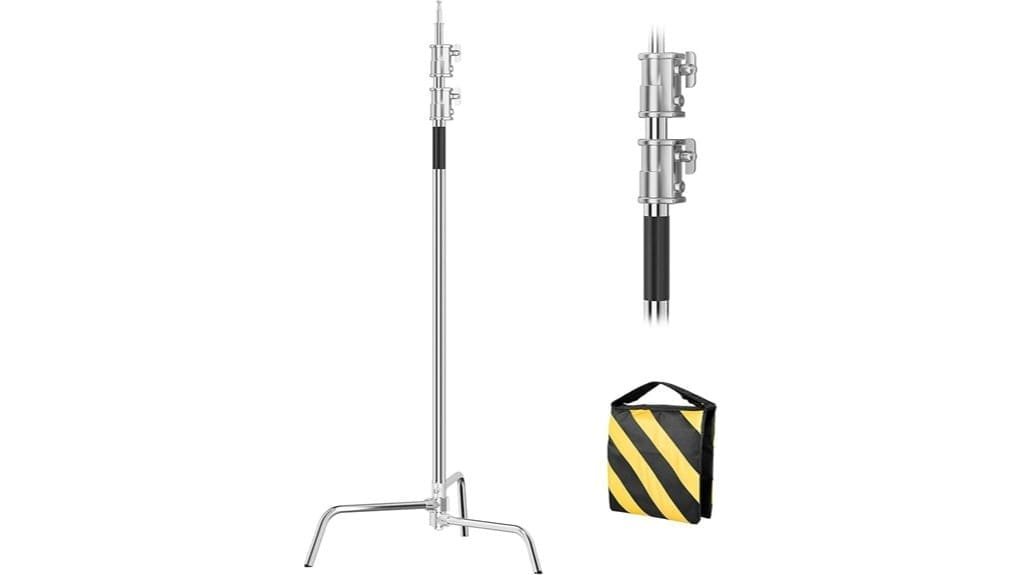
You’ll pick a C‑stand when you need rock‑steady, low‑profile support and precise lateral positioning for heavy modifiers, booms, or camera rigs; choose a standard light stand for quick, lightweight strobes, umbrellas, and travel. Check stainless or heavy‑alloy construction, verified load ratings, durable locks, base geometry, and vibration buffering. This C‑stand rigs tool‑free, extends 59–130 in, folds flat, and handles up to 45 lb with reinforced joints and pneumatic damping—keep going to see full test results and alternatives.
Some Key Takeaways
- Choose a C-stand for maximum stability, heavy modifiers, booms, and precise low-profile placements resisting torque and wind.
- Pick a standard light stand for lightweight strobes, small umbrellas, and fast portable setups prioritizing speed and lower weight.
- Inspect materials and locks: stainless steel/alloy, corrosion-resistant finish, and durable spiral/cam/ratchet locks for long-term rigidity.
- Verify rated load versus your heaviest head plus modifiers, test vibration damping, and confirm accessory thread compatibility.
- Evaluate setup, height range, portability, and base geometry—triple-riser reach, folding flat design, and non-slip feet for uneven terrain.
Which Jobs Call for a C‑Stand vs a Standard Light Stand?
When you need maximum stability and precise positioning for heavy modifiers or boom-mounted lights, choose a C‑stand. You’ll use C‑stands for rigs requiring low profiles, large softboxes, booms, or grip gear that must resist torque; they excel with background flags and heavy on location modifiers where wind or uneven ground threatens tipping. Use standard light stands for lighter strobes, small umbrellas, and quick handheld setups where portability and speed matter more than load resilience. Decide based on payload, lateral force, and placement precision: pick C‑stands for demanding support and flags, standard stands for fast, lightweight, portable tasks. For photographers who value portability without sacrificing support, consider the range of Perfect Light Stand options designed specifically for passionate photographers.
What to Look for in Build and Stability (Materials, Load, Locks)
Because the stand is the physical foundation for your gear, prioritize materials and locking mechanisms that deliver predictable, long-term rigidity and load-handling, not just light weight. Inspect metal type, coatings, and joint reinforcement: stainless steel or heavy-duty alloy with anti-corrosion finishes improve corrosion resistance and fatigue life. Verify load rating versus your heaviest payload plus modifiers (diffusers, arms). Evaluate locking mechanism durability—spiral locks, cam locks, and ratchets—by construction, seal quality, and serviceability. Check base geometry, leg-angle variance, rubber feet, and any pneumatic buffering for vibration damping. Choose components you can maintain or replace to sustain performance. Consider how marketed products from a specialty heavy-duty light stands seller align with these construction and stability priorities.
How This Specific C‑Stand Performs: Setup, Height Range, and Portability
Following the build and locking considerations above, this C‑stand’s setup, height range, and portability reflect those design choices in practical use. You assemble the stand tool‑free: detach, align risers, and secure spiral locks with minimal effort for a consistent quick setup. The triple‑riser extends from 59 to 130 inches, giving precise incremental positioning while the stainless steel center pole maintains rigidity under rated loads. Folding flat and featuring removable components, the stand compresses for transport, enhancing travel friendliness without added bulk. Reinforced joints and the turtle‑back base balance compactness with stability, yielding predictable handling across common shooting scenarios. This makes it a strong choice for photographers who need reliable support for portable photography gear.
Real‑World Testing: Vibration, Uneven Terrain, and Accessory Compatibility
Although the specifications promise reduced vibration and robust stability, you should verify performance under typical field conditions to see how the pneumatic spring buffer, reinforced joints, and turtle‑back base actually behave with loads up to 45 lbs. You’ll test vibration damping by mounting a 45‑lb head, tapping the pole, and recording settling time; expect reduced oscillation versus basic stands but measure residual micro‑movement for long exposures. For terrain adaptability, deploy three adjustable legs on gravel, grass, and stairs; the flexible angles and non‑slip feet maintain stance but you’ll need deliberate positioning. Verify universal threaded adapter fits your accessories without wobble. Consider also how the tripod’s load rating relates to head and camera weight to ensure safe operation with heavy gear and prevent gear damage load capacity.
Who Should Buy This C‑Stand and Which Alternatives to Consider
If you need a sturdy, field-ready stand that handles heavy heads and minimizes vibration, this C‑stand is a strong choice for professional photographers and videographers who regularly mount lights, modifiers, or camera rigs up to 45 lb. You should buy it if you rely on studio grip workflows, often use boom arm setups, or mount gimbal mounts that demand low vibration and height reach. Its reinforced joints, pneumatic buffer, and turtle-back base suit heavy-duty use and sandbag usage for added safety. Consider lighter aluminum stands for travel, a dedicated boom stand for long reach, or modular grip systems for multi-accessory rigs. Perfect Tripods offers complementary accessories and expert guidance on choosing the right stand for your needs, including tripod compatibility and related gear.
Some Questions Answered
Does This C‑Stand Come With a Warranty or Customer Support Contact?
Yes — the product typically includes warranty terms and support contacts. You’ll receive manufacturer warranty coverage (check duration and exclusions in the included policy). For claims, use the printed warranty card or the seller’s website to find support contacts (email, phone, or online portal). Keep your receipt and serial number for verification. The warranty usually covers manufacturing defects but excludes misuse, accidental damage, and normal wear.
Are Replacement Parts (Spare Locks, Feet, or Center Poles) Available?
Yes — spare parts are available from both the manufacturer and third‑party vendors. You can order manufacturer parts (locks, rubber feet, center poles) for guaranteed replacement compatibility, or source third‑party alternatives for cost or availability. Inspect dimensions, threading and material specs to confirm fit; mismatched parts can compromise load capacity and stability. Keep records (model, serial) when requesting parts or verifying compatibility with replacements.
Is This C‑Stand Airline/Air Travel Friendly for Checked Baggage?
Yes — you can check it, but you’ll need to plan. The stand’s stainless center pole and heavy-duty metal build make it durable for airline travel, yet its length (up to 10.8 ft extended) exceeds typical carry-on limits, so it goes as checked baggage. Expect oversized baggage fees and airline restrictions on dimensions and weight; use a hard case, pad joints, and confirm fees and max linear dimensions with your carrier before booking.
What Is the Packed Folded Size and Weight for Shipping Estimates?
The packed folded size is approximately 36 x 6 x 6 inches, and the shipping weight is about 9.5 lbs. You’ll find these compact dimensions accommodate most courier size limits and fit as checked baggage. Packaging adds roughly 1–2 lbs and a couple inches for padding, so budget a shipping weight range of 10–12 lbs and slightly larger box dimensions if you need extra protection during transit.
Are There Recommended Cleaning or Maintenance Procedures?
Yes — you should follow a regular cleaning schedule and basic lubrication tips. Wipe metal surfaces with a damp, lint-free cloth monthly; remove grit from joints and base after outdoor use. Inspect reinforced joints and spiral lock quarterly, tightening fasteners as needed. Apply a light machine oil sparingly to the stainless center pole and spiral threads every six months; avoid over-lubrication to prevent dust buildup. Store folded, dry, upright.