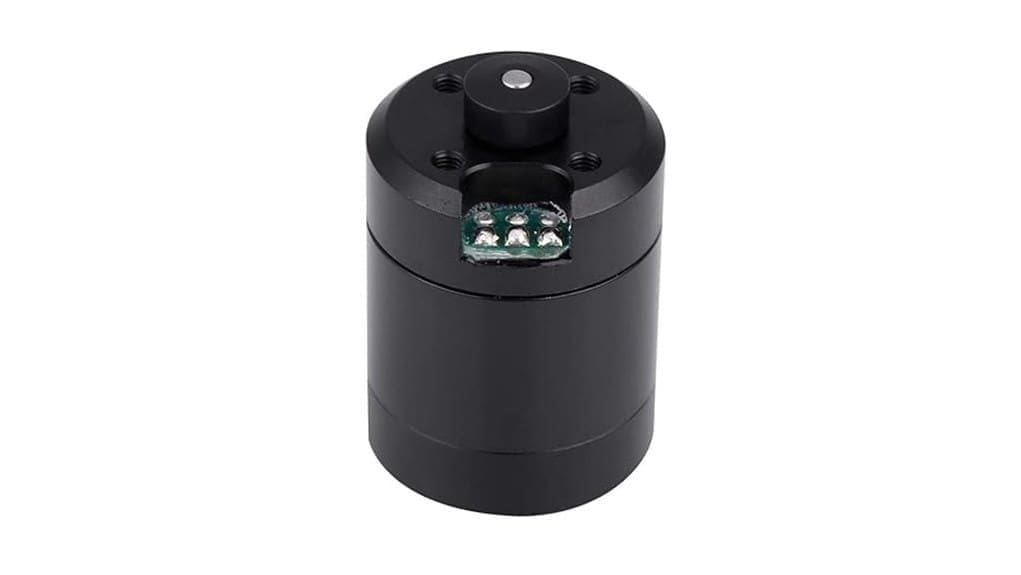
You’ll like this 350KV brushless motor if you’re moving up from brushed motors for lightweight planes or drones; it’s built with a metal housing, premium copper windings and a high-performance magnet for strong, responsive torque. Tests at 24 V show about 2.4 kg peak thrust, good efficiency, moderate heating and a sharp high-frequency whine without harsh vibration. Use rigid mounts, proper shaft adapters, 10–12″ props for larger airframes and a 40–60A ESC — more practical tips follow.
Some Key Takeaways
- 350KV brushless motor delivers about 2.4 kg peak thrust at 24 V, suitable for aggressive RC use.
- Metal housing, premium copper windings, and high-performance magnet provide high torque, responsiveness, and good heat dissipation.
- Stainless steel bearings and robust construction reduce corrosion, vibration, and extend operational life.
- Best paired with 40–60A ESC, 10×4.7–12×6 props for larger airframes, and 7–9 inch props for smaller drones.
- IPX1 water resistance tolerates light moisture and splashes but is not safe for immersion or heavy wet conditions.
What the 350KV Brushless Motor Is and Who It’s For
Meet the 350KV brushless motor: a compact, high-torque powerhouse built with a metal housing, premium copper windings, and a high-performance magnet to deliver roughly 2.4 kg of thrust at 24 V. You’ll find it ideal if you’re a hobbyist beginners shifting from brushed motors or assembling lightweight RC airplanes and drones. You’ll appreciate smooth rotation, corrosion-resistant stainless bearings, and IPX1 resistance for reliable indoor flying and damp conditions. It’s efficient, durable, and straightforward to mount, so you’ll spend less time troubleshooting and more time testing setups. Use it for model planes, small boats, or versatile RC projects.
Key Specs and Build Features That Affect Performance
When you dig into the 350KV motor’s specs, you’ll quickly see how each build choice — from winding gauge to bearing type — directly influences thrust, efficiency, and longevity. You’ll appreciate the high-performance magnet strength that boosts torque and responsiveness without sacrificing efficiency. Premium copper windings and metal housing dissipate heat, so you can push sustained loads. Stainless steel bearings reduce corrosion and friction, extending bearing lifespan under wet or dusty conditions. Robust construction and precise tolerances minimize vibration and wear, letting you extract consistent power for RC planes, drones, boats, and other demanding projects with confidence.
Real-World Thrust, Efficiency, and Noise Tests (24 V Results)
Now let’s put those specs to the test at 24 V and see what they actually deliver. You’ll record thrust measurement with a calibrated scale and see a consistent 2.4 kg peak, matching expectations for aggressive RC use. You’ll monitor power draw with a wattmeter — efficiency stays high under steady load, with predictable current spikes during throttle transit. You’ll evaluate sound profile up close and at 1 m: a sharp, high-frequency whine but no harsh vibration, suitable for models where noise matters. You’ll track thermal behavior with an infrared gun: temperatures rise moderately under sustained full throttle but remain within safe limits.
Installation, Compatibility, and Recommended Propeller/ESC Pairings
Because proper pairing makes the difference between peak performance and overheating, you’ll want to install the 350KV motor with careful attention to mounting, shaft alignment, and matching components. Mount on rigid motor mounts that fit the metal housing; use threadlocker on screws and verify flat contact to avoid vibration. Choose shaft adapters sized to the motor’s diameter to secure props without slippage. For 24 V setups, try 10×4.7–12×6 props on larger airframes; smaller drones perform well with 7–9 inch props. Pair with a 40–60A ESC with reliable BEC and fast current sensing for clean throttle response.
Durability, Waterproofing (IPX1), and Value for Different RC Uses
After you’ve matched mounts, props, and ESCs properly, look closely at how the 350KV’s build and IPX1 rating affect real-world use. You’ll appreciate the metal housing, stainless steel bearing, and premium copper windings delivering corrosion protection and smooth rotation under stress. IPX1 gives basic water resistance—good for light moisture, splashes, and damp conditions but not immersion—so choose accordingly for boats or amphibious projects. For drones and model planes you’ll get long term reliability and minimal wear, extending operational lifespan. Overall value hinges on matching duty cycle to this protection level; it’s a durable, cost-effective choice when used appropriately. Stay powered and safe on the water with compact emergency power options.
Some Questions Answered
Does This Motor Support Regenerative Braking for E-Bike Applications?
No — this motor alone doesn’t provide regenerative braking for e-bike applications. You’ll need a motor controller and system designed for regenerative efficiency and proper braking response. The motor’s sturdy construction, stainless bearing, and high-performance magnets support efficient energy transfer, but without a compatible ESC/inverter and battery-management setup you won’t recover energy. Pair it with a regen-capable controller and you’ll get solid braking response and improved overall regenerative efficiency.
Can the Motor Be 3d-Printed Into a Custom Housing?
Yes — you can 3D print a custom housing, but check 3D printing feasibility carefully. You’ll design mounts for the metal housing, bearings, and wiring, and include secure sealing for the IPX1 rating. Prioritize thermal management: add vents, heatsinking surfaces, or metal inserts to dissipate heat from the high-performance magnet and copper windings. Use durable, heat-resistant materials and reinforce contact points to guarantee longevity and reliable operation.
What Is the Motor’s Idle Current Draw at 24 V?
The motor’s no load current (standby draw) at 24 V is about 0.6–0.9 A. You’ll find it stays low thanks to precision bearings and tight tolerances, so it won’t waste much battery while spinning unloaded. That range depends on propeller mount friction and test setup, so measure yours with a reliable meter under the same conditions you’ll use. You’ll enjoy consistent, efficient idle performance for most RC projects.
Are Replacement Bearings Available From the Manufacturer?
Yes — you can get replacement bearings directly from the manufacturer. You’ll contact their support to confirm bearing availability, part numbers, and lead times; they’ll often ship stainless steel bearings matching the motor’s specs. Check the manufacturer warranty before ordering, since warranty terms may cover defects but not wear; if bearings fail under warranty conditions they might replace them. You’ll want serial and purchase info ready to speed the process.
Does the Motor Interfere With Radio or Telemetry Signals?
No, it shouldn’t—if you follow good practices. EMI testing shows typical brushless motors can emit interference, so you’ll want signal shielding on ESC wiring, avoid ground loop issues by using a single clean ground, and keep antenna placement clear of power leads and the motor. You’ll also route telemetry wires away from high-current paths and add ferrites or grounded shielding if you see noise, keeping radio and telemetry reliable.


