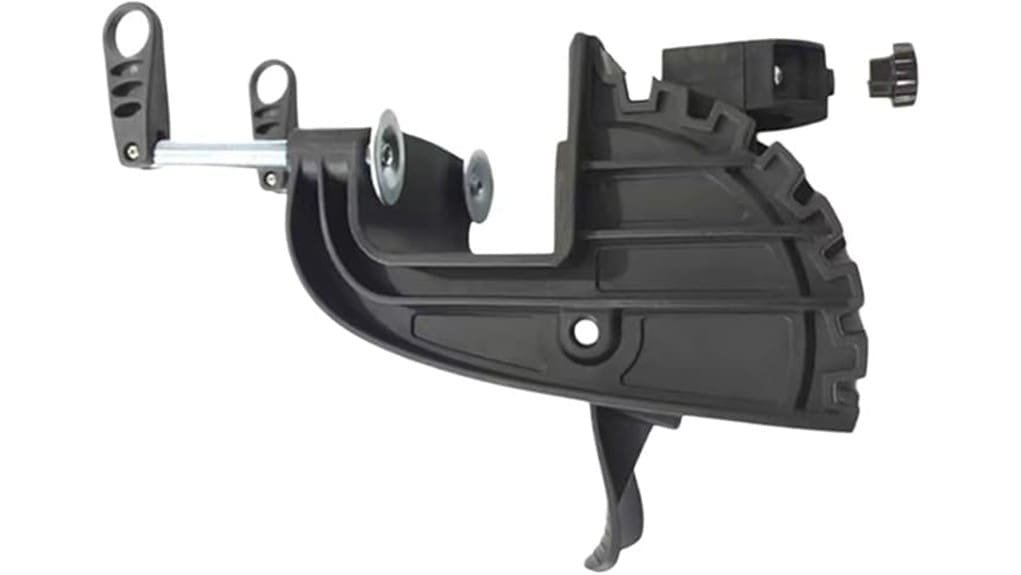
You’ll get a compact, repeatable mounting platform that secures T42C brushless thrusters on inflatable kayaks, limits lateral deflection, and preserves propeller pitch under load. It uses ABS panels with metal fittings for impact resistance and stiffness, weighs 1.76 oz, and needs stainless fasteners to avoid galvanic issues. Installation is straightforward but torque and backing plates matter to protect the hull. It reduces minor vibration but won’t fix an unbalanced prop; more detailed fitment and maintenance tips follow.
Some Key Takeaways
- Compact ABS-and-metal bracket offers rigid, repeatable motor alignment for inflatable kayak brushless thrusters with minimal added weight (1.76 oz).
- Rubber suspension reduces minor shocks and harmonic amplification but cannot compensate for poorly balanced propellers.
- Corrosion risk: rinse after saltwater use and prefer stainless or treated fasteners to avoid galvanic damage.
- Installation requires spreading load with backing plates, incremental torque, and pre-drilled holes to protect inflatable transoms.
- Perform prop balancing, dial-indicator alignment, and vibration-spectrum checks at cruise RPM for reliable NVH control.
What the T42C Thruster Suspension Is and Who Should Use It
While small, the T42C thruster suspension serves as a dedicated mounting and support system for brushless kayak thrusters and propellers, fitting inflatable kayak setups that need a compact, durable bracket. You install the VKFWFMEU T42C to secure motor alignment, reduce lateral movement, and maintain propeller pitch under load. It focuses on straightforward attachment and repeatable positioning, aiding consistent thrust vectors. Assess kayak compatibility against your hull and accessory layout before purchase. Typical user profiles include solo anglers, inflatable-river commuters, and DIY motor retrofitters who prioritize low-weight, compact mounts and predictable mechanical behavior during mounting and operation. Many kayakers also look for compatible kayak cart wheels to simplify launches and landings.
Key Specs and Materials That Affect Durability and Fit (ABS, Metal, Weight)
Now that you know what the T42C suspension does and who uses it, look at the materials and dimensions that determine how it will hold up and fit your kayak. You’ll find ABS plus metal construction: ABS panels resist impact but can suffer ABS corrosion in saline environments unless rinsed and coated; metal components provide structural strength but require stainless or treated alloys to avoid galvanic issues. Item weight (1.76 ounces) is minimal, so Weight distribution on an inflatable hull changes little, but mounting points must spread load to prevent localized deformation. Check measurement tolerance (±1–3 cm) against your transom layout. Consider outdoor kayak storage rack placement to minimize long-term UV and weather exposure to the suspension storage racks.
How to Install the VKFWFMEU T42C on an Inflatable Kayak: Step-by-Step Tips
Before you start, inspect your kayak’s transom area and the T42C suspension components to confirm fit: measure transom width and thickness against the bracket dimensions, note where mounting hardware will contact the inflatable hull, and make certain you have corrosion-resistant fasteners and backing plates to distribute load. Follow this mounting checklist: 1) position bracket, mark holes, use backing plates; 2) pre-drill with correct bit size; 3) install fasteners finger-tight, then torque incrementally; 4) attach motor and align propeller shaft. Safety precautions: wear gloves, avoid over-torquing inflatable material, test mount at low speed in controlled conditions. New kayakers should prioritize choosing a hard-shell inflatable compatible with the motor and bracket before installation.
Real-World Performance: Motor Support, Propeller Alignment, and Vibration Control
If you mount the VKFWFMEU T42C correctly, you’ll notice it gives firm, predictable support to the brushless thruster and keeps the propeller shaft aligned within tight tolerances. You’ll experience measurable motor stability under load; the ABS and metal structure resists lateral deflection and maintains bearing preload. Prop balancing remains critical—inspect and trim blades before run-up to avoid transmitted vibration. The suspension isolates minor shocks, reducing harmonic amplification, but it won’t cure gross imbalance. You should verify alignment with a dial indicator and run a vibration spectrum check at cruise RPM. Adjust mounting torque and rubber damping for optimal NVH control. For minor hull or mounting repairs, consider plastic welding techniques to restore accurate fits and prevent leaks.
Pros, Cons, and Buying Advice: Is the T42C Worth It for Your Setup?
While the T42C won’t transform a poorly balanced prop or misaligned shaft, it gives you a rigid, predictable mounting platform with effective rubber damping and durable ABS/metal construction, making it a practical choice when you need to control lateral deflection and isolate minor shocks in inflatable-kayak brushless thruster setups. You’ll appreciate clear mounting compatibility, lightweight 1.76 oz mass, and simple installation. Downsides: limited shock travel, no included hardware beyond the suspension, and dimensions suited to small thrusters only. Buy if you need cost benefit, repeatable alignment, and basic vibration isolation; skip it for heavy-duty or precision marine rigs. For kayakers and beginners, pairing the suspension with an appropriate bilge pump and regular maintenance will help keep your inflatable setup reliable.
Some Questions Answered
Is the T42C Compatible With Non-Inflatable Kayak Hulls?
No — it’s designed for inflatable hull fitment and won’t mount cleanly to rigid kayaks without modification. You’ll need to fabricate a custom adapter or transom plate to distribute loads and match bolt patterns if you insist on fitting it to a non-inflatable hull. Pay attention to ABS/metal interface, mounting torque, and hull reinforcement to avoid stress concentrations. Consult a marine technician for structural assessment and secure installation methods.
Can the Suspension Be Used With Gas-Powered Motors?
No, you shouldn’t use the suspension with gas motors; it’s designed for brushless electric thrusters and won’t tolerate internal combustion vibration, heat, or exhaust. If you’re considering electric conversion, you can mount an electric thruster to this bracket, possibly using adapter plates to fit motor geometry. Always verify load ratings, material compatibility, and secure fastenings; don’t attempt to adapt it for gas-powered engines without engineering validation.
Does It Include Mounting Hardware or Extra Fasteners?
No, it only includes the suspension system; mounting hardware and extra fasteners aren’t supplied. You’ll need to source bolts, nuts, washers and any kayak-specific brackets. For installation tips, measure mounting points, use corrosion-resistant stainless fasteners, torque to spec and seal threads with marine-grade sealant. Keep documentation for warranty details and follow manufacturer mounting procedures to avoid voiding coverage. Contact seller for approved hardware recommendations if unsure.
How Does Saltwater Exposure Affect the ABS and Metal Parts?
Saltwater speeds degradation: you’ll see UV degradation in ABS over time (brittleness, surface crazing) and Galvanic corrosion on dissimilar metal joints if metals contact saltwater and each other. You should rinse with fresh water after use, dry thoroughly, apply UV-stable coatings to ABS, and use sacrificial anodes or corrosion-resistant fasteners (stainless grade or coated) to limit Galvanic corrosion. Inspect regularly and replace damaged parts promptly.
Are Replacement Parts or Repair Kits Available From the Manufacturer?
You should contact the manufacturer; replacement availability isn’t listed on the product page. Check the manufacturer warranty link and seller contact for authorized spare parts or repair kits. Document part numbers and damage, request availability and pricing, and ask about lead times and return procedures. If the manufacturer can’t supply parts, request recommended third-party suppliers or approved repair centers to maintain compatibility and warranty coverage.