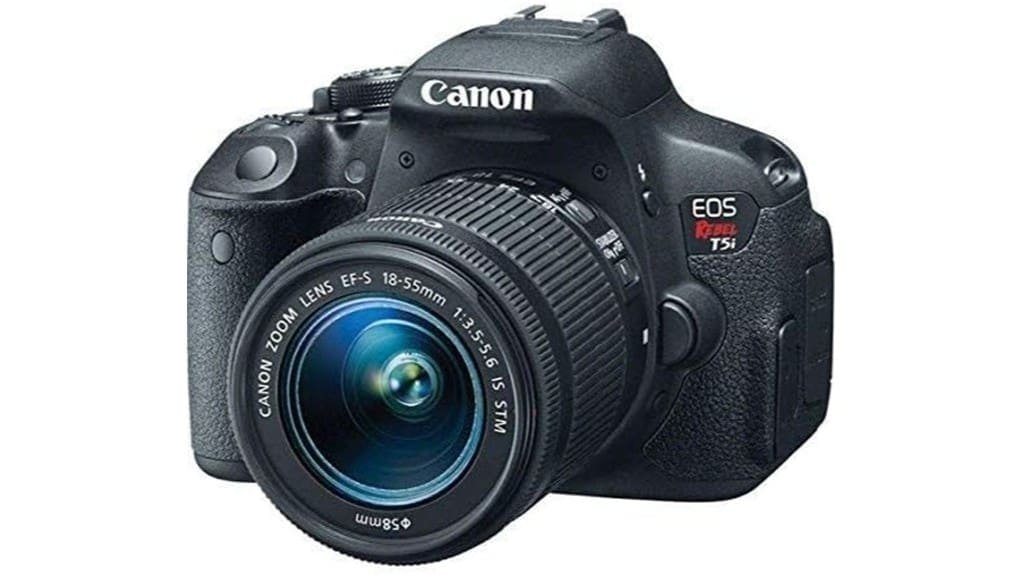
You’ll get an 18MP APS‑C DSLR with solid handling, 1080p video, a 3.0″ touchscreen, and Canon EF/EF‑S lens support—good for beginners and vintage‑style filmmakers. Image quality is clean to about ISO 1600, then noise and detail loss rise; Hybrid CMOS AF and STM lenses help video focus but Live View AF isn’t class‑leading. Expect 5 fps, 9 cross‑type AF points, and fair dynamic range. Keep going to see specifics on performance, pros, cons, and value.
Some Key Takeaways
- 18MP APS‑C sensor with DIGIC 5 delivers good JPEG/RAW up to ISO 1600; noise and detail decline after that.
- 3.0″ capacitive touchscreen, 9 cross‑type AF points, and optical viewfinder offer intuitive handling for beginners.
- Full HD 1080p video with Hybrid CMOS AF and STM lens support yields quieter, smoother focus for DSLR-style filmmaking.
- 5 fps burst, solid grip, and logical controls suit hobbyists upgrading from compacts or smartphones.
- Modern mirrorless cameras surpass its AF speed and high‑ISO performance; best as discounted or refurbished value.
Canon EOS Rebel T5i at a Glance: Key Specs and What They Mean
Start with the essentials: the Canon EOS Rebel T5i is a compact DSLR centered on an 18 MP APS‑C CMOS sensor paired with a DIGIC 5 processor, giving you 14‑bit captures, ISO 100–12800 (expandable to 25600), and 5 fps continuous shooting—specs that balance resolution, low‑light reach, and speed for enthusiast photographers. You’ll find 9 cross‑type AF points, a 3.0″ touch LCD, and Full HD video. Evaluate sensor longevity by noting robust APS‑C design and Multi Shot Noise Reduction for extended useful life. Mount supports Canon EF/EF‑S, ensuring broad accessory compatibility with lenses and flashes. For mirrorless camera enthusiasts looking to expand their kit, consider investing in essential gear to get the most from your system.
Real-World Image and Video Performance: Low Light, Autofocus, and Dynamic Range
When you push the T5i into challenging lighting, its 18 MP APS‑C sensor and DIGIC 5 processor deliver usable images up to about ISO 1600 with good detail retention and controlled noise; beyond that, noise becomes more pronounced and fine detail softens, though Multi Shot Noise Reduction and the expandable ISO 25600 can salvage some shots in a pinch. You’ll find low light performance competent for handheld work with IS lenses; autofocus tracking in Live View is improved by STM and Hybrid CMOS AF but lags compared to modern systems. Dynamic range is fair—highlight recovery is limited, though color depth remains satisfactory for moderate edits. For photographers who want precise exposure control when shooting challenging scenes, using a dedicated light meter can help ensure consistent results.
Handling, Controls, and Touchscreen Live View Experience
Although the T5i’s control layout follows Canon’s familiar ergonomics, you’ll notice a few trade-offs between accessibility and compactness. You get a sculpted grip that provides solid grip comfort for extended handheld use, though smaller hands may find the thumb rest cramped during long sessions. Buttons are logically grouped; mode dial and main command wheel give efficient exposure control. In Live View the 3.0″ capacitive screen offers accurate touchscreen responsiveness for AF point selection, menu navigation, and touch-to-shoot. Hybrid CMOS AF and STM lens pairing improve focus during video, but AF speed in Live View is middling compared with modern mirrorless systems. The T5i pairs well with camera straps designed for active photographers to keep the camera secure and accessible.
Who Should Buy the T5i Today? Use Cases and Alternatives to Consider
If you need a straightforward DSLR that still delivers reliable image quality, responsive ergonomics, and easy-to-use features for hybrid stills/video, the T5i is worth considering—especially if you find a renewed kit at a significant discount. You should buy it if you’re a beginner upgrading from a smartphone or basic compact and want manual control, optical viewfinder shooting, and an 18MP APS‑C sensor with DIGIC 5. Vintage filmmakers will appreciate the DSLR aesthetic, STM lens quietness, and 1080p capture for stylistic projects. Consider modern mirrorless alternatives for superior AF, higher ISO performance, and smaller bodies. Check our selection of essential DSLR gear to outfit your camera for different shooting situations.
Value Checklist: Included Items, Warranty, Price Expectations, and Final Recommendation
Because a camera’s overall value hinges as much on what’s in the box and the support behind it as on its specs, you should weigh the T5i’s included items, warranty, and realistic price expectations alongside performance. The renewed kit ships with the EF‑S 18‑55mm IS STM, battery, charger, eyecup, neck strap, and manual — essential boxed accessories that let you shoot immediately. Expect a 90‑day limited warranty; confirm the seller’s return policy for refurbished units. Price should reflect age: target budget buyers and beginners. Recommendation: buy refurbished only with verified return policy and sensible savings versus newer models. Consider pairing the camera with a hard shell camera case to protect your investment during travel and storage.
Some Questions Answered
Can the T5I Use Remote Shutter Triggers or Intervalometers?
Yes — you can use remote shutter triggers and intervalometers with the T5i. You’ll connect wired remotes via the camera’s remote port or use compatible wireless triggers (IR or radio receivers) on the hot shoe. The body supports bulb shooting for long exposures, so intervalometers that control shutter duration and release cycles work well. Evaluate trigger compatibility (Canon protocol) and power requirements to guarantee reliable wireless triggers and timed bulb sequences.
Is the Battery Compatible With Newer Canon Lp‑E8 Replacements?
Yes — the T5i uses the Canon LP‑E8 battery, so battery compatibility with newer Canon LP‑E8 replacements is high. You can use genuine Canon LP‑E8 or reputable aftermarket batteries labeled for LP‑E8; they’ll fit and power the camera. Evaluate aftermarket batteries for capacity, cell quality, and safety features (overcharge/discharge protection). Low‑cost options may reduce runtime or risk voltage/current inconsistencies, so pick reviewed brands and check warranty/specs.
Does the Camera Support External Microphones During Video Recording?
Yes — you can use an external microphone with the camera’s 3.5mm mic input during video recording. You’ll get cleaner on‑camera audio than the internal mic, and the camera’s Hybrid CMOS AF/video features remain functional. If you need XLR mics or professional rigs, you’ll require audio adapters or a separate recorder with sync. Monitor levels externally, since the T5i lacks headphone output for real‑time monitoring.
Can I Tether the T5I to a Smartphone for Remote Control?
No — the T5i doesn’t natively tether to a smartphone via built‑in Wi‑Fi. You can, however, add wireless adapters (Wi‑Fi SD cards or hotshoe/USB dongles) and use third‑party apps to achieve remote control, live view, and image transfer. Performance varies: expect latency, limited shutter control, and occasional instability compared with modern Wi‑Fi cameras. Evaluate adapter compatibility and app reviews before buying to guarantee reliable tethered operation.
Are There Firmware Updates Available to Improve Performance?
Yes — firmware availability exists but is limited; Canon released a few official updates for the T5i that address stability and minor bug fixes. You’ll check Canon’s support site for the latest firmware and release notes. Expect modest performance improvements (AF reliability, menu stability) rather than major feature additions. Follow Canon’s update instructions, back up settings, make sure battery is charged, and verify compatibility before applying any firmware.