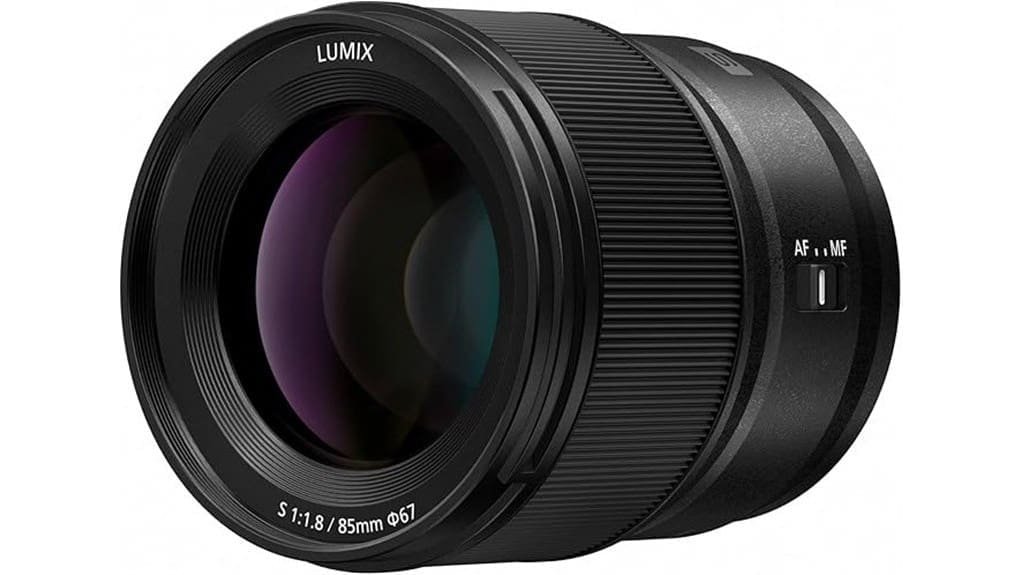
You’ll find the Panasonic Lumix S Series 85mm f/1.8 S‑S85 delivers impressive sharpness, especially stopped down, with strong center performance and tidy edge correction by f/2.8–f/4. Chromatic aberration is well controlled and bokeh is smooth with pleasing midtone separation. Autofocus is snappy on L‑mount bodies with decent low‑light behavior and suppressed focus breathing for video; rely on IBIS for best stabilization. It’s compact, weather‑resistant and great for portraits—keep going to learn specifics.
Some Key Takeaways
- Excellent sharpness, especially stopped down; strong center wide open with edges improving by f/2.8–f/4.
- Two ED elements control chromatic aberration, reducing fringing in high-contrast scenes.
- Smooth, pleasing bokeh with circular aperture and gradual falloff for strong subject separation.
- Snappy autofocus and reliable continuous tracking on L‑mount bodies; occasional low‑light micro‑hesitations.
- Compact, weather‑resistant 454 g build ideal for portraits, events, and handheld use with IBIS recommended.
Image Quality and Bokeh at a Glance: Sharpness, Chromatic Aberration, and Defocus Rendering
Although it’s a compact, lightweight optic, the Lumix S 85mm f/1.8 delivers impressively sharp images across the frame, especially when stopped down a stop or two, and you’ll notice crisp edge-to-edge detail for portraits and short-telephoto work. You’ll find center sharpness strong wide open, with minimal sagittal softening toward edges that tightens markedly by f/2.8–f/4. Chromatic aberration is well controlled thanks to ED elements, reducing fringing in high-contrast shifts. Defocus rendering gives smooth, circular aperture bokeh with gradual falloff, and contrast control remains balanced to preserve midtone separation and subject pop without harsh shifts. This makes the lens a great match for photographers focused on zoom lens techniques who want reliable performance in a compact package.
Autofocus, Video Performance, and Stabilization: Real-World Behavior and Focus‑Breathing Results
Having established strong sharpness and pleasing bokeh, it’s worth looking at how the S-S85 performs when you’re tracking subjects or recording video. You’ll find autofocus is snappy on compatible L‑mount bodies, with reliable continuous tracking for portraits and events. In dim scenes, low light AF remains competent though not class‑leading; occasional micro-hesitations can occur at very low contrast. Video benefits from the lens’s focus‑breathing suppression—framing shifts are minimal when racking focus. Stabilization is digital, so you’ll depend on in‑body image stabilization when available; combined IBIS and lens digital correction produce steady handheld clips for most run‑and‑gun work. For photographers wanting remote control options and accessories, consider camera remotes and shutter triggers that complement on‑camera stabilization and shooting workflow, especially models compatible with mirrorless systems like the L‑mount camera remotes.
Handling and Build: Size, Weather Resistance, Controls, and Filter/Accessory Fit
When you pick up the Panasonic Lumix S 85mm F1.8, its compact, well-weighted chassis immediately feels intentional — light enough (454 g) for all-day handheld work yet substantial enough to convey durability. You’ll appreciate the compact ergonomics: short barrel, balanced front-to-back feel on L‑mount bodies, and a smooth, damped focus ring. Weather sealing is present—dust- and splash-resistant with operational tolerance to about −10°C—so you can keep shooting in less‑friendly conditions. Control placement is conservative: no extra switches, just a tactile focus ring and clear mount alignment. Filter compatibility is straightforward via a 67 mm thread; standard hoods and filters fit without vignetting. For photographers who use tripods and need quick portrait framing, pairing this lens with an L-bracket from a specialty seller can improve stability and workflow.
Who Should Buy the S‑S85? Ideal Use Cases and Camera Compatibility (L‑Mount Bodies)
If you shoot portraits, weddings, or anywhere you need flattering medium‑tele focal length and fast low‑light performance, the Panasonic Lumix S 85mm F1.8 is an easy recommendation — it gives you a compact, sharp 85mm rendering with smooth bokeh and reliable AF on L‑mount bodies. You’ll find strong portrait suitability for headshots and tight environmental portraits, plus wedding compatibility for ceremonies and reception moments where speed and isolation matter. It pairs well with full‑frame L‑mount bodies for consistent AF, weather‑resistant handling, and portable setups. Choose it if you prioritize image quality, low‑light control, and a lightweight prime for event work. It also complements a range of mirrorless accessories and essentials for serious enthusiasts, including essential gear for mirrorless camera setups.
Value Check: Specs, Alternatives, Price Positioning, and Final Recommendation
Because the S‑S85 balances optical performance, build quality, and portability, it’s worth a close look when you need a mid‑tele prime that won’t weigh you down on long shoots. You get 85mm, f/1.8 sharpness, two ED elements, smooth bokeh, weather‑resistant construction, and a 454 g compact body. Price positioning sits in the accessible pro‑enthusiast range—cheaper than some high‑end 85mm primes, pricier than budget third‑party options. Alternatives include similar L‑mount or adapted Sony/Canon 85mm primes. Check warranty terms (manufacturer 1‑year) and return policy before buying. Recommendation: strong value if you prioritize optics and portability. This lens is a good fit for photographers who enjoy digital camera gear and want a specialized prime for portraits and events with enthusiast photographers in mind.
Some Questions Answered
Does This Lens Work With APS-C L‑Mount Cameras Without Crop Issues?
Yes — you can use this L-mount 85mm on APS‑C bodies without crop issues; APS C compatibility is native since L-mount supports both formats, but you’ll get a 127.5mm equivalent field of view. Expect minimal Vignetting behavior on APS‑C compared with full‑frame because the smaller sensor crops darker corners. You’ll retain autofocus and image quality; watch framing and depth‑of‑field changes versus full‑frame, and enjoy the compact handling.
Can the S‑S85 Be Used for Close‑Up or Macro Photography?
Yes — you can use the S‑S85 for close-up work, but it’s not a true macro. You’ll employ close focus technique to get sharp subjects at its minimum focus distance, yielding pleasing lens compression effects and creamy bokeh at f/1.8. Expect moderate magnification (not 1:1), so plan framing and possible extension or crop if you need greater reproduction. It’s excellent for portraits and detail shots, not dedicated macro.
Is There Any Electronic Aperture Control When Used on Third‑Party Bodies?
Yes — you’ll get electronic aperture control only if mount communication and firmware compatibility are supported by the third‑party body. You should check that the camera’s L‑mount implementation accepts electronic aperture commands and that both lens and camera firmware are up to date. Without compatible communication or firmware support the lens will default to mechanical/manual aperture behavior, so automatic aperture control and exposure automation may be limited or unavailable.
How Compatible Is the Lens With In‑Camera Subject Tracking Systems?
You’ll find the lens broadly compatible with in-camera subject tracking: it delivers fast autofocus with low autofocus latency and clean subject recognition on most L‑mount bodies. Because focusing is driven by the camera’s AF system, performance depends on your camera’s algorithms and firmware. You’ll get reliable eye/face tracking and smooth re-acquisition for moving subjects on modern bodies, though top-tier tracking speed and priority vary by camera model and updates.
Are There Third‑Party Lens Adapters That Affect Autofocus Performance?
Yes — third‑party adapters can affect autofocus performance. You’ll see adapter impacts vary by brand and electronics: cheap or passive adapters often remove AF communication, while smart adapters may introduce AF latency or occasional focus hunting. For best results, choose reputable adapters with confirmed L‑Mount compatibility and firmware updates; test AF latency and tracking in your camera body before critical shoots to guarantee reliable performance.